

personal
Psychogeographies of
FASHION
Garment Relationships?

this study examines how our environments - and our emotional
responses to those environments - shape the relationships we have
with our clothing.


So, what do most of us do every day?
we get up
we brush our teeth
we get dressed
we go to work


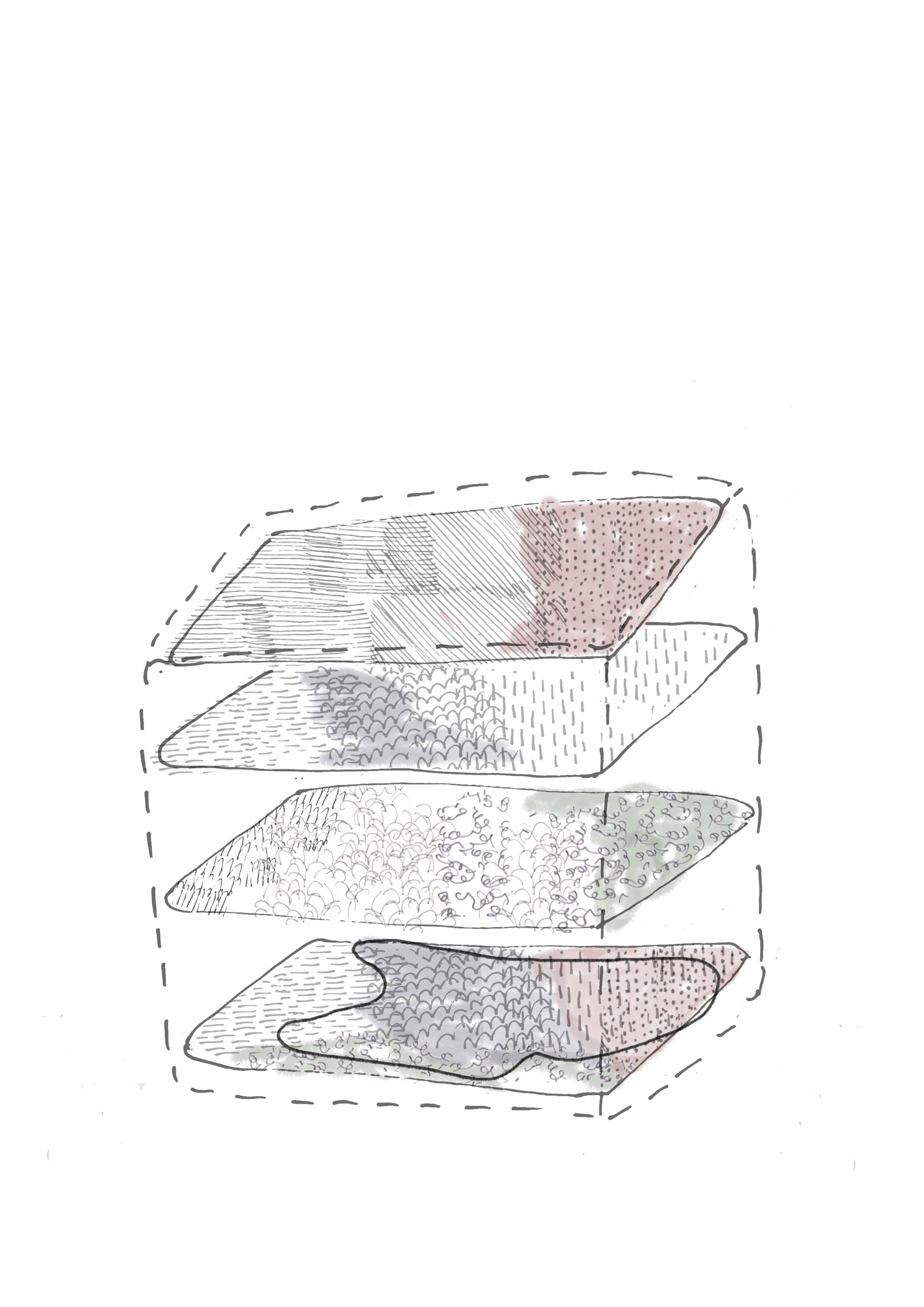
This frame represents the
sensations you experience
while
wearing your clothes
And how these feelings may
inform the actions you take.

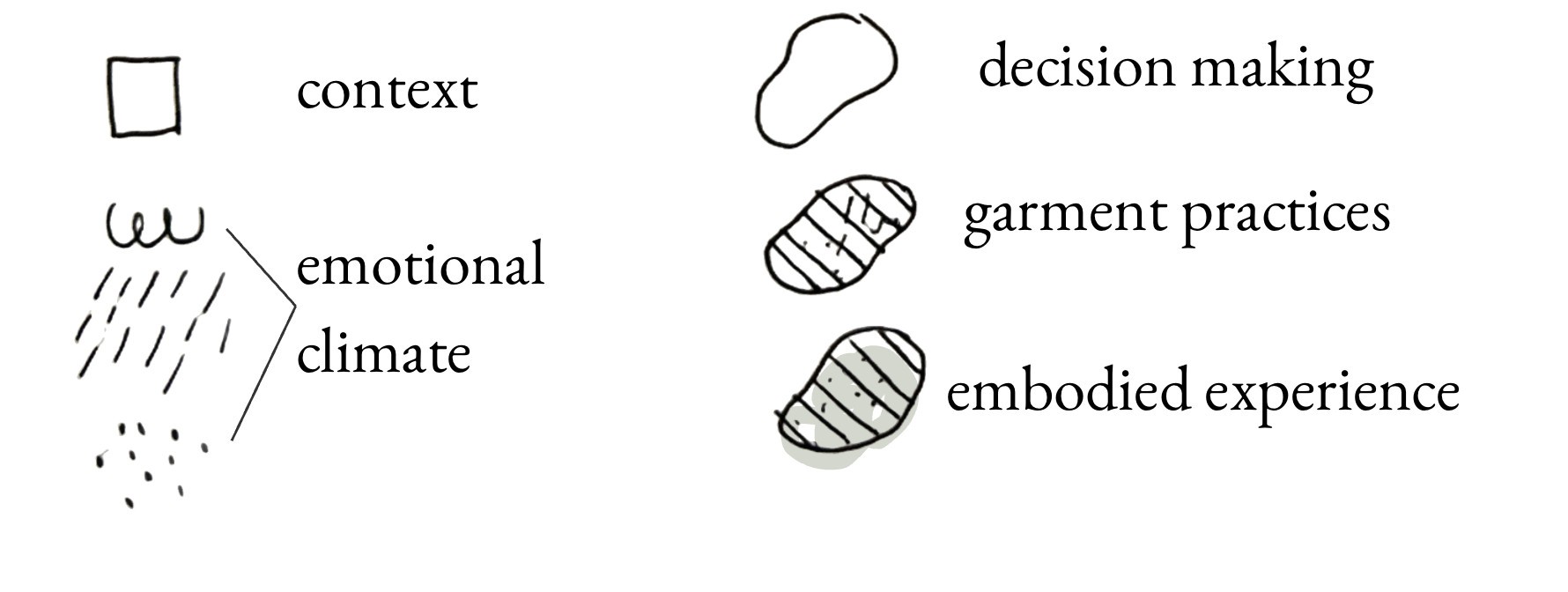
Overlayed shapes represent decisions we make about our clothing,
(e.g. storage, care and repair) which are influenced by the intersection
of embodied experiences, emotional climate and shifting spatial
contexts.

to give you a rough idea:

The dashed cube represents
your world
- the broader
environmental contexts you move through every day

The second frame's textures illustrate
emotional climate
(like feeling
anxious during your commute),
capturing fluctuating affective states
shaped by place.

Context

Embodied
Experience

Emotional
Climate

Garment Practices

Within this frame, varied textures indicate
shifts in spatial contexts. For example: your
home, your commute, your workplace.


there is no right answer to this
question. In fact, this study aims
to frame precise data gathering
within personal reflection... a
difficult balance to strike.

Here is an example:



Affective states coded through embodied experience

dense traffic


usually in this order.


perceived elevation

Departure


And what about the cyclist's clothes?
Our cyclist experiences their clothing through
the prism of their interactions with the
world around them
. What happens to our
cyclist, in other words, also happens to
whatever they're wearing. Experience and
memory are woven into the fabric of our
clothes, in much the same way that our brains
process and store information.

This idea - that
clothes are receptacles of
experience
- is at the core of this project. Why do we
form stronger relationships with some garments than
others? Is it simply preference between styles? Is it
comfort or fit? Or are there everyday factors - social,
spatial, and emotional - that reinforce or inhibit
strong relationships with certain garments - and
inform how we care for them?

Not every item of clothing we own will have intrinsic
sentimental value, like your great-grandmother's
wedding dress, say. Not every relationship-reinforcing
event can be seismic. Take those ratty old shorts our
cyclist wears every day.
Can small actions, repeated
often, build a durable relationship between wearer
and garment?

the graphic below displays an emotional interpretation
of a cycling journey, where a cyclist's emotions are
mapped from the point of their departure to the point
they arrive at their destination.

Does wearing an itchy woolen sweater at the bus
stop make you feel...
annoyed?

What impact do our
everyday interactions
with the
world around us have on our garment relationships? Do
these interactions vary based on the clothes we decided
to wear that day? What effect does that have?

are you
AGGRAVATED
when your highly aerodynamic , albeit dorky, cycling shorts are officially too
dirty to wear?

Do you feel
alive
knowing your trusty trench-coat has traversed all nine transit
zones of the London Underground Tube network?

What can these experiences teach us about ourselves and our
clothes?
That's what this study aims to find out.